RippleBoard
Rack-level power smoothing for AI compute.
A training run begins. Thousands of GPUs go from idle to full draw in under a second. It ends, and they collapse back just as fast. Megawatts appear and disappear on a timescale no generator can follow and no interconnection study anticipated.
The problem is not how much. It is how fast.
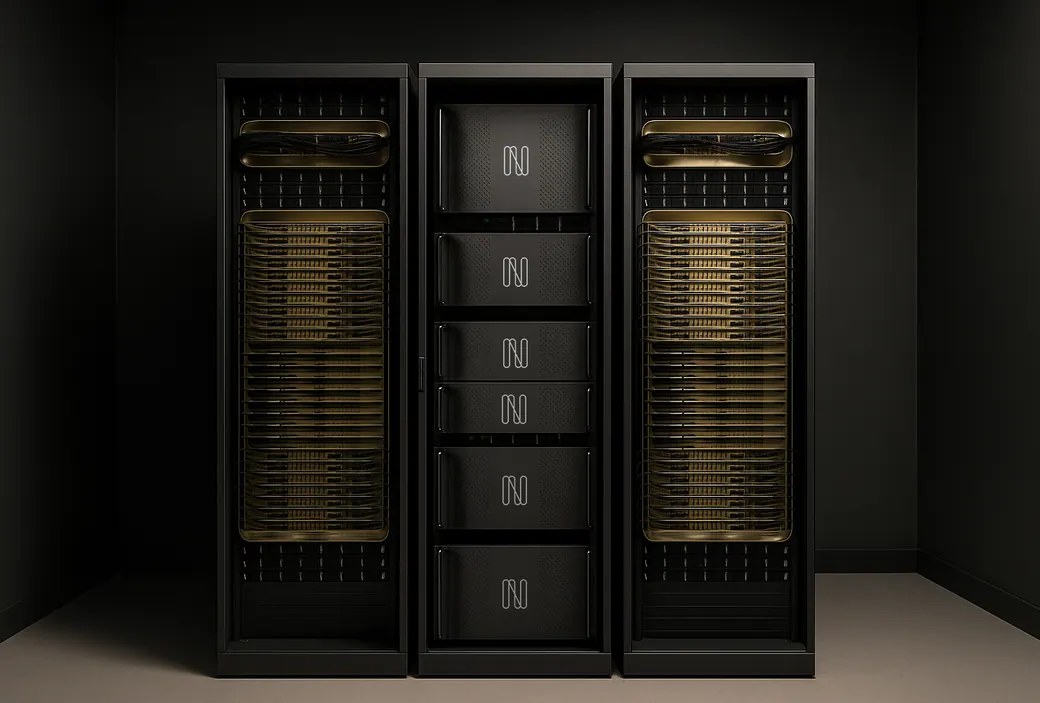
There is no diversity left to average.
Data centers used to be the easy customer. Thousands of unrelated workloads averaged into one of the smoothest, most predictable loads on the grid, and a utility could plan around it.
Large-scale AI training ended that. One job runs in lockstep across tens of thousands of GPUs, and the facility’s power stops looking like a data center and starts looking like a square wave.
That waveform is now one of the hardest constraints on where compute can be built. Utilities are starting to set limits on how fast a site’s power may change, and speed-to-power has replaced cost-per-kilowatt as the thing that decides whether a site gets built.
Upstream, the utility sees a trapezoid instead of a cliff.
Industry attention goes to the surge. The collapse does more damage.
When a synchronized load disappears in milliseconds, the energy already in motion has nowhere to go. Voltage rises on equipment that was sized for the load it just lost. Upstream protection sees an event it was not specified for. The failures that follow are not usually dramatic, they are cumulative: stressed components, shortened service life, and a reliability profile that degrades in ways nobody attributes to the workload that caused it.
RippleBoard sits between the rack and that event. The supercapacitor stage absorbs the transient at the point of origin, before it propagates into the distribution system, the UPS, or the utility’s equipment.
The same mechanism delivers voltage ride-through in the other direction. Dips and surges arriving from the grid are met with localized energy injection in milliseconds, and the compute above does not observe them.
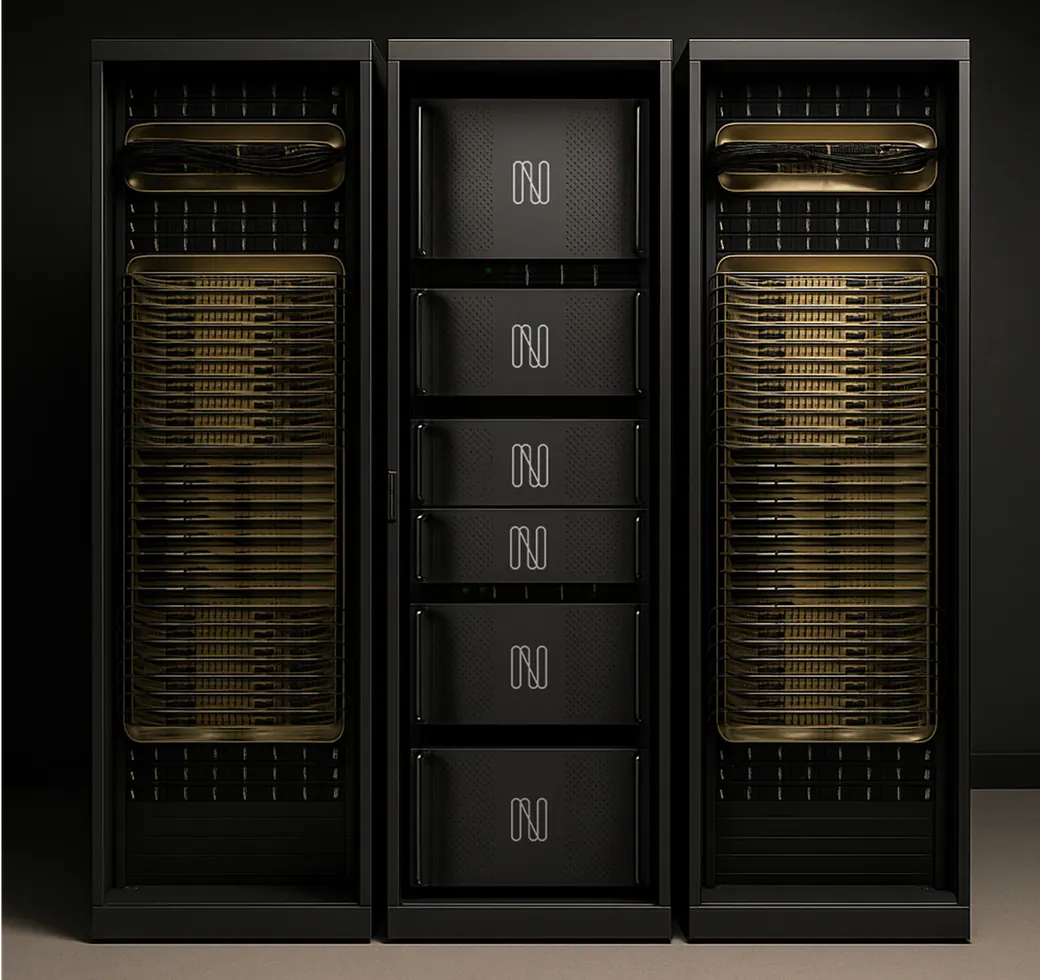
Flexibility becomes a contractual asset instead of a risk.
The most valuable thing a large new load can offer a utility is flexibility.
of new demand the existing grid could reliably absorb with no capacity expansion at all — provided those loads accept curtailment during roughly 0.25 to 1 percent of annual hours. The lower figure is about ten percent of national peak demand.
NORRIS, T. H., T. PROFETA, D. PATINO-ECHEVERRI, AND A. COWIE-HASKELL. 2025.
RETHINKING LOAD GROWTH. NI R 25-01. NICHOLAS INSTITUTE, DUKE UNIVERSITY.
That is the interconnection queue, solved, for any operator who can actually deliver curtailment on demand. Most cannot. Committing to shed load is straightforward on paper and difficult in a facility where curtailment means degrading a customer’s training run.
RippleBoard makes the commitment executable: load is shaped, capped, and reduced at the rack under BoardOS coordination, with stored energy covering the difference, rather than by turning compute off.
Built for the transition.
Nvidia’s move from 415 V AC to 800 V DC rack architecture changes where power conversion happens and how much is lost getting to the chip.
RippleBoard is a DC-native system designed for that topology.
The system.
Same intelligence. Different problem.
A commercial building has capacity it never uses. A data center has load it cannot get served. The loop runs the same either way.